
Why Trusted Introductions Matter More Than Access to Capital
Why do family offices and private investors reject opportunities before reviewing them? Explore the hidden costs of introductions, reputational risk, and the future of verified dealmaking.

The Emperor’s Color Code
The Emperor’s Color Code BRYANTSTRATTON.ME · ESSAYS IN TRUTH, TRUST & HUMAN BEHAVIORA PERSONAL ESSAY IN BEHAVIORAL ECONOMICS, FAITH & ORGANIZATIONAL DESIGN Truth, Power, and the Dangerous Psychology of Being Right Confessions of an Accidental Behavioral Economist By Bryant Stratton About the scenes: The color-named characters are fictionalized composites based on recurring behavioral patterns. Their dialogue is…
Read more

Build Something Worth Approaching: A Village-First Model for Opportunity in Africa
A village-first framework for African investment and development based on trust, traditional leadership, value addition, diaspora meaning, local ownership, and discovering opportunity before attempting to scale it.

Make Good Friends, Keep the Old: Friendship, Discomfort and the Surfboard Ark
Surfboard is building a different kind of network: make new friends, keep the old, remember the forgotten, test intuition against reality, and help people become custodians for one another.
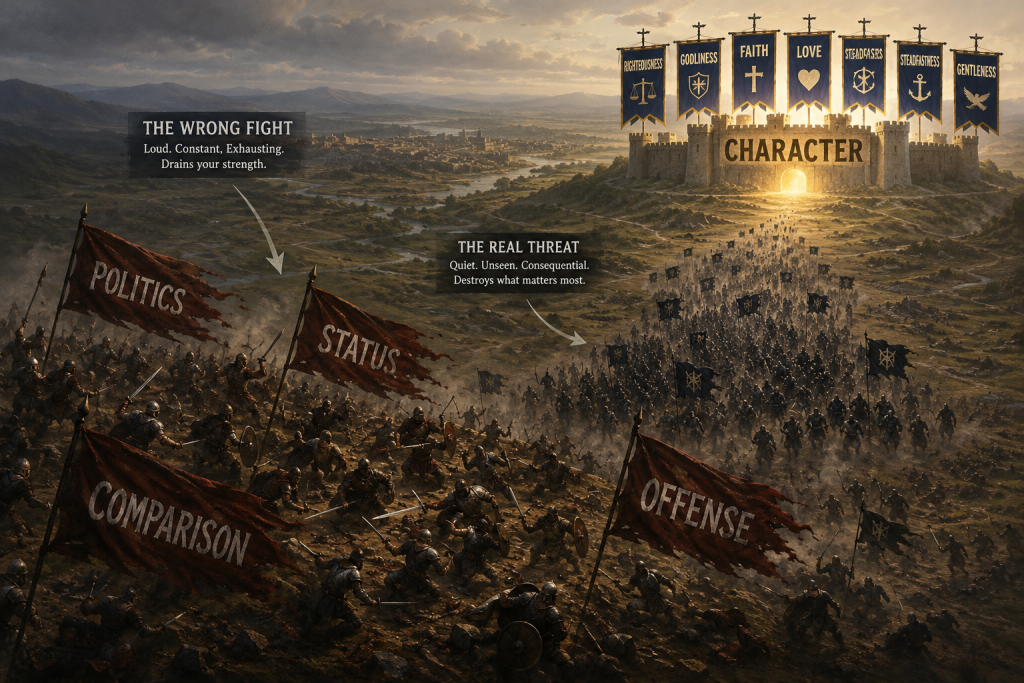
The Wrong Fight: Why the Enemy Doesn’t Need to Defeat You—Only Distract You
Imagine a battlefield viewed from above. In the foreground, soldiers are intensely fighting over a small hill marked “Politics,” “Status,” “Comparison,” and “Offense.” In the distance, almost unnoticed, an enemy force advances toward a glowing fortress labeled “Character.” Six banners fly from the fortress walls: Righteousness, Godliness, Faith, Love, Steadfastness, and Gentleness, illustrating that the…
Read more

Protected: Truth as a Living Graph: Why Reality Should Always Be Allowed to Edit Our Thinking
There is no excerpt because this is a protected post.

The Missing Layer Between Truth and Restoration
Healthy families, teams, and communities are not built by avoiding conflict but by creating environments where truth, dignity, and accountability flow in every direction. Discover why mutual correction is essential for lasting restoration.

When Opportunity Reveals Loyalty
A reflection on loyalty, trust, betrayal, and leadership. Why people often choose future opportunity over allegiance, and how leaders can respond without resentment.

When Truth Isn’t Enough: Learning the Difference Between Correction and Presence
Why good intentions sometimes create distance. Exploring the tension between truth, understanding, biblical leadership, and the human need to feel seen.

When Truth Feels Like Rejection: The Difference Between Intent, Impact, and Assumption
Why do people assign motives instead of asking questions? Exploring the tension between truth, impact, responsibility, and the human need to be understood.