
When Opportunity Reveals Loyalty
A reflection on loyalty, trust, betrayal, and leadership. Why people often choose future opportunity over allegiance, and how leaders can respond without resentment.

When Nobody Understands What You Do: A 30-Day Way Back to Proof
A practical guide for founders, builders, consultants, and high-capacity people who feel misunderstood, overextended, and stuck. Learn how to turn unclear value into one clear offer, one paid pilot, and real proof in 30 days.



The Scarcity Has Moved: Why Judgment Is the New Competitive Advantage in the AI Era
AI is making information, outreach, and deal flow abundant. The next competitive advantage is structured judgment: determining what is real, who has authority, what deserves attention, and what action should happen next.

Build Something Worth Approaching: A Village-First Model for Opportunity in Africa
A village-first framework for African investment and development based on trust, traditional leadership, value addition, diaspora meaning, local ownership, and discovering opportunity before attempting to scale it.
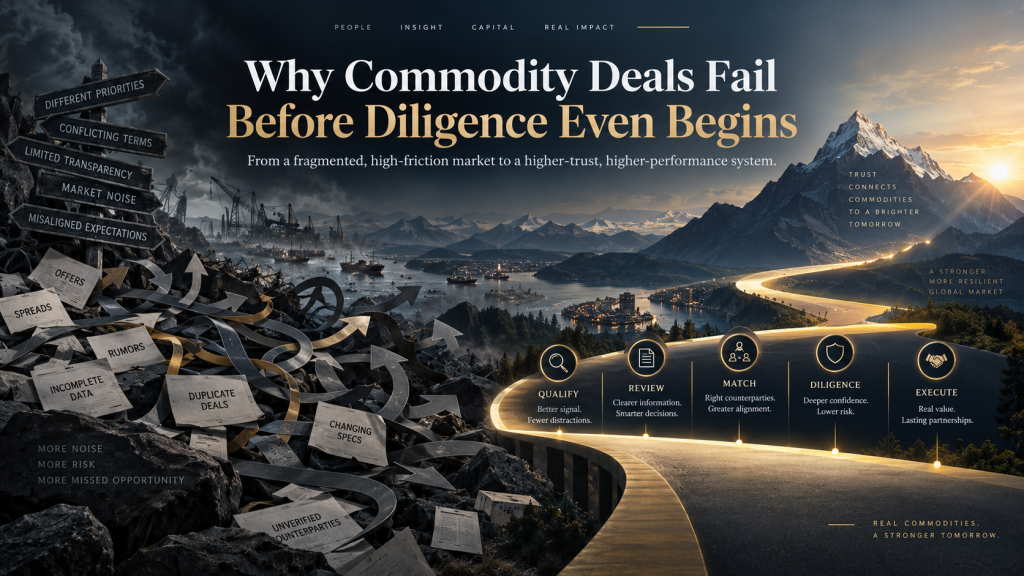
Why Commodity Deals Fail Before Diligence Even Begins
Commodity deals often fail before diligence because of fragmented broker chains, weak qualification, unclear authority, unrealistic commissions, and poor information flow. Here’s a better operating model.

The Psychology of Predatory Intermediation: Trust, Integration and the Hidden Psychology of Commodity Markets
Commodity markets reveal how incomplete information, ego, process, relationship protection and inferred motives can turn legitimate intermediation into predatory behavior. A look at why integrated intermediaries build stronger, more transparent markets.
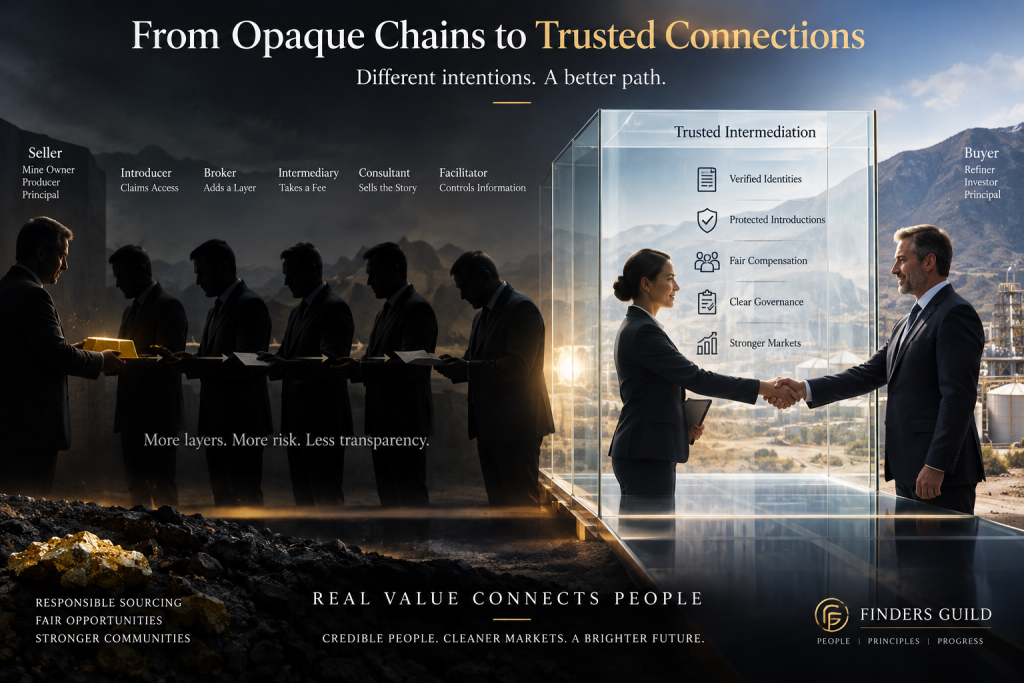
Why Non-Predatory Intermediaries Win Trust in High-Fraud Markets
In opaque markets like gold and commodities, the people who seem least desperate to control the deal can sometimes gain the most direct access to principals. The reason may be less about good intentions and more about transparent incentives, low-extraction behavior, and the ability to walk away.

What Would Change Your Mind? How Strong Crews Avoid the Manipulation Trap
Strong crews need more than shared vision. They need aligned purpose, converged context, intellectual humility, and the willingness to ask what evidence would change their minds.

Make Good Friends, Keep the Old: Friendship, Discomfort and the Surfboard Ark
Surfboard is building a different kind of network: make new friends, keep the old, remember the forgotten, test intuition against reality, and help people become custodians for one another.

AI Is Not Just Changing Work. It Is Changing Who Gets to Define You.
AI transcription and persistent memory are turning everyday conversations into searchable models of identity. Learn why AI governance is becoming an interface, ownership, and human agency problem.
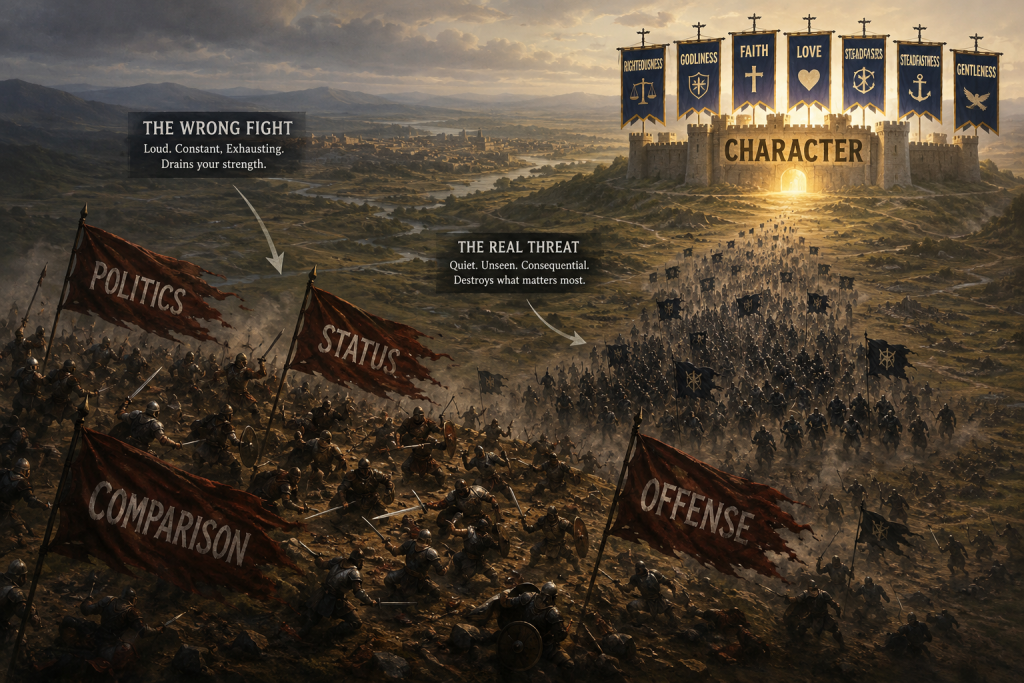
The Wrong Fight: Why the Enemy Doesn’t Need to Defeat You—Only Distract You
Imagine a battlefield viewed from above. In the foreground, soldiers are intensely fighting over a small hill marked “Politics,” “Status,” “Comparison,” and “Offense.” In the distance, almost unnoticed, an enemy force advances toward a glowing fortress labeled “Character.” Six banners fly from the fortress walls: Righteousness, Godliness, Faith, Love, Steadfastness, and Gentleness, illustrating that the…
Read more
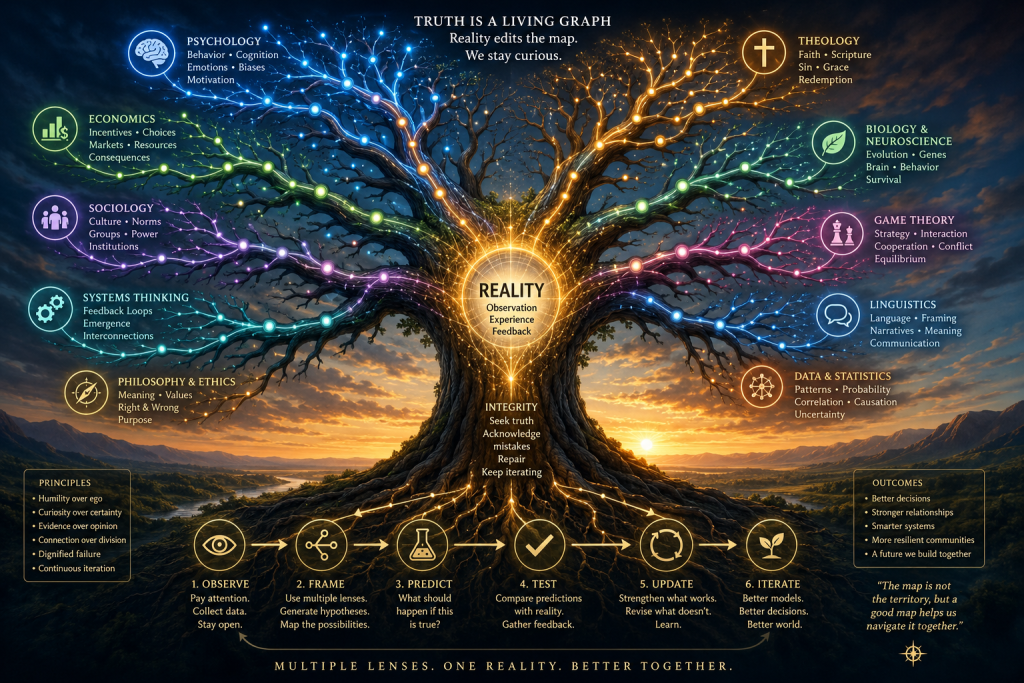
Protected: Truth as a Living Graph: Why Reality Should Always Be Allowed to Edit Our Thinking
There is no excerpt because this is a protected post.