There is a moment most people recognize, even if they’ve never named it.
It’s when things stop being theoretical.
When the room gets quiet, the stakes get real, and something inside you asks a simple question:
Are you actually who you say you are?
Not in words.
Not in intention.
But in what you do next.
That moment doesn’t happen in comfort. It happens in places that test you.
And if you’ve ever walked far enough, you eventually come across one.
The Crossing
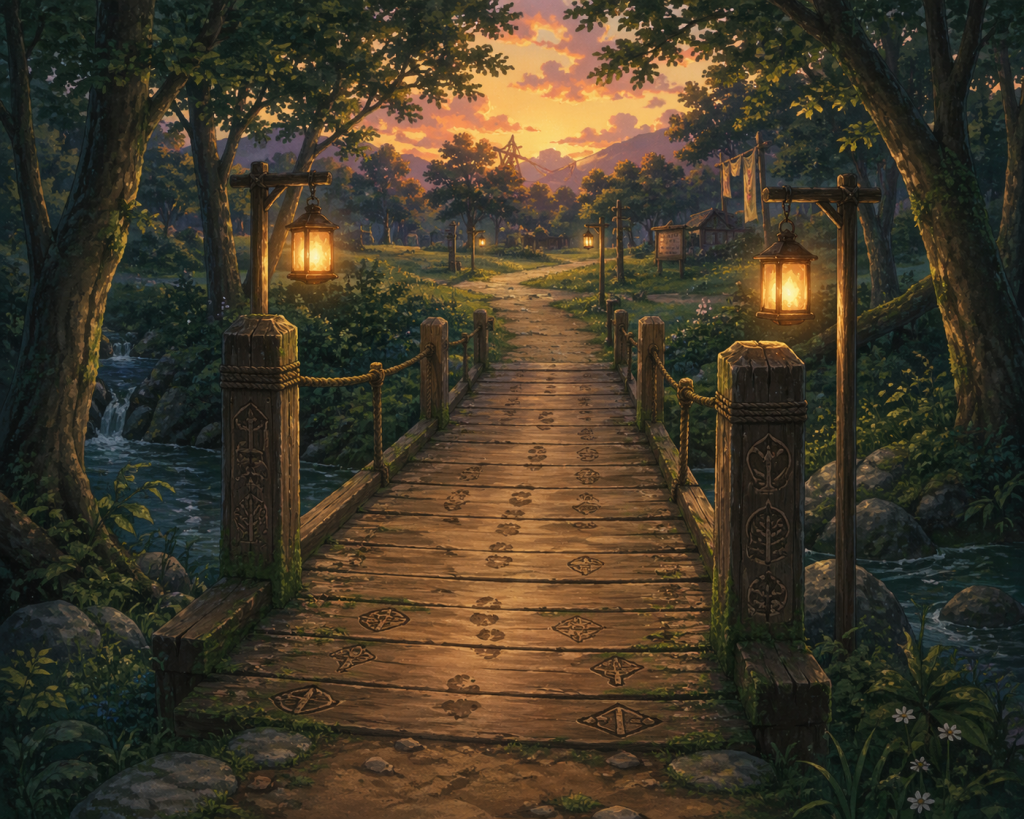
Imagine a path through a dense forest. Not dangerous, but uncertain.
You’re not alone, but you’re not being guided either. People walk beside you, some talking, some quiet, some turning back without saying why.
Then you reach a clearing.
There’s a narrow bridge. A lantern waiting. No instructions.
You pick it up because something in you knows you should.
Across the bridge, there’s a man waiting. Older. Still. Watching.
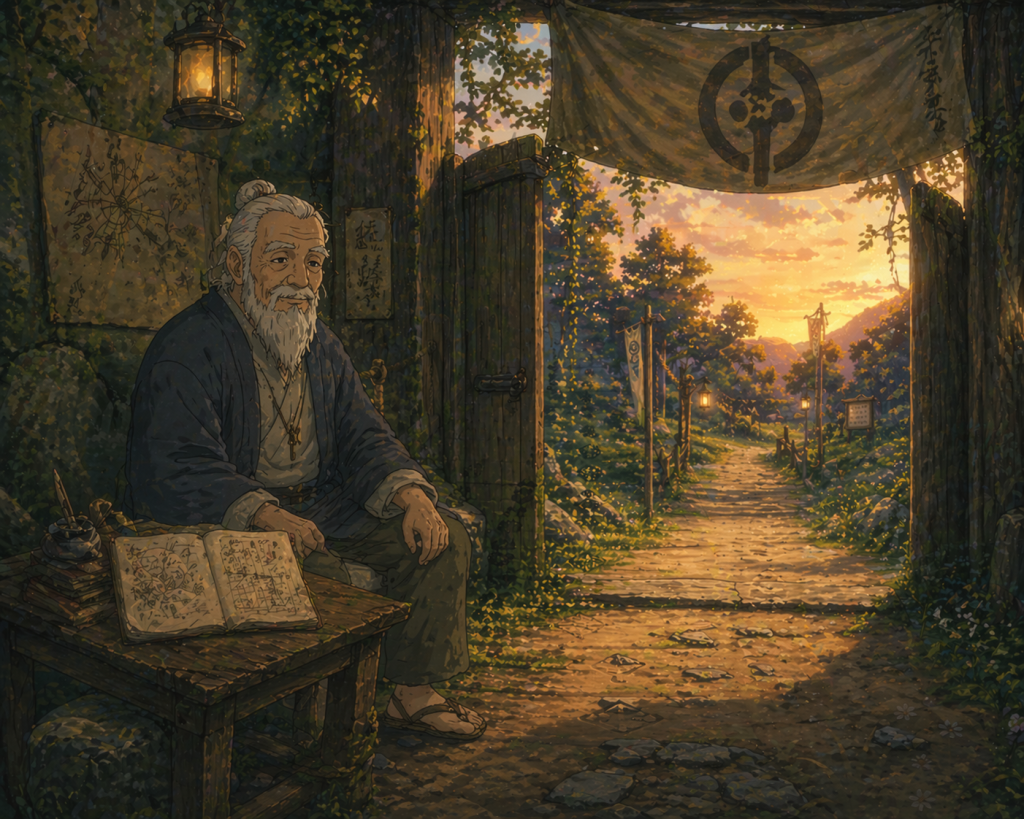
He asks questions.
Not many. Just enough.
And the strange part is this, no one else can hear your answers. The people behind you lean in, trying to catch even a word, but they never can.
Because the answers aren’t for them.
They’re for you.
Some people pass through. Some stay. Some turn back.
There’s no argument. No explanation.
Just movement, or stillness.
The City
On the other side, the path opens.
And what you see doesn’t feel like fantasy. It feels… right.
Alive.
There’s a place where people bring their best work, not for approval, but because it’s what they have to offer. Paintings, ideas, designs, expressions of something they’ve been carrying.
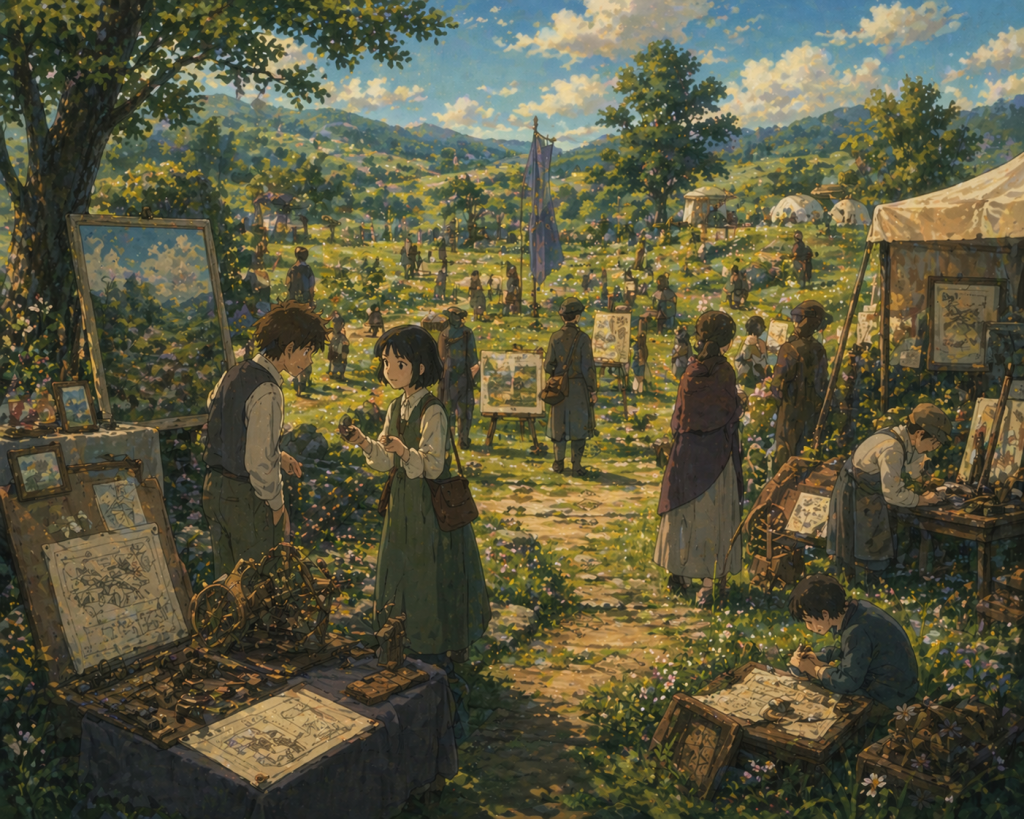
People walk through, not judging, just recognizing. A coin here, a nod there. Not because it’s required, but because appreciation sustains something real.
This is the first thing you see.
And most people misunderstand it.
They think this is the point.
It isn’t.
The Tinkering
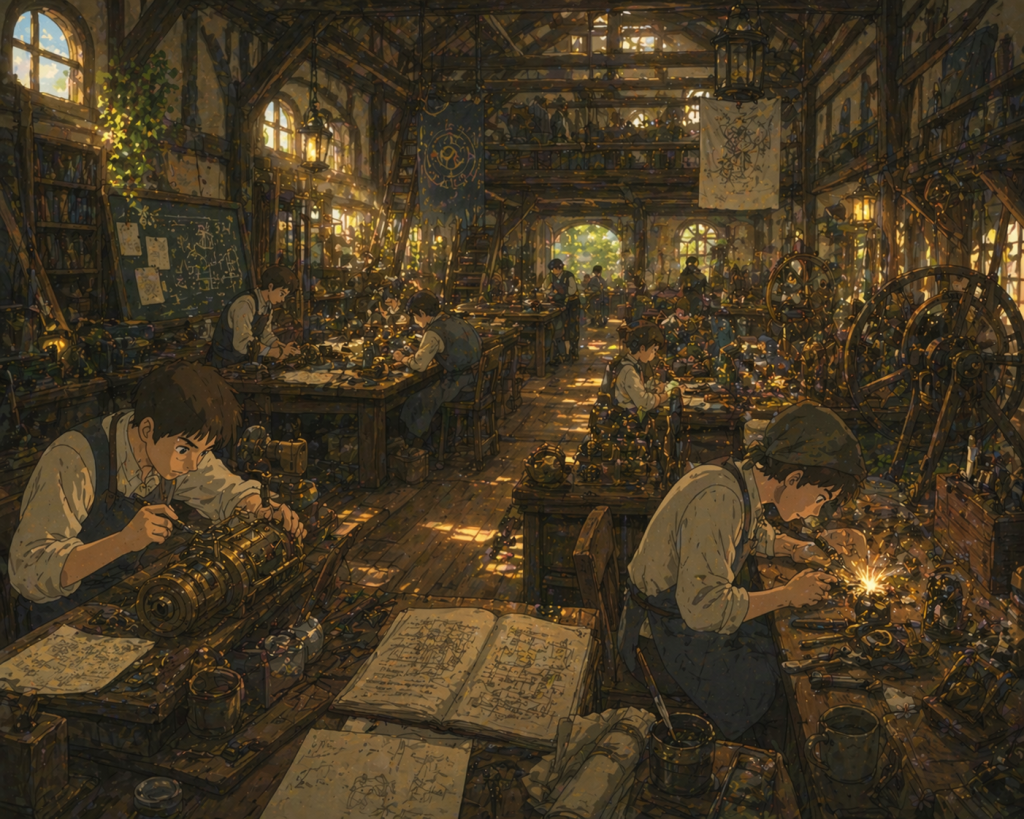
Further in, things change.
Tables. Tools. Half-built machines. People working, not talking as much now.
This is where ideas stop being admired and start being tested.
Things break here. A lot.
What looked brilliant in the open air gets taken apart, rebuilt, questioned.
Some people leave at this point.
They liked the feeling of being seen.
They didn’t expect to be challenged.
But the ones who stay start to change.
They stop explaining what they’re going to do.
They start showing what they’ve done.
The Harbor
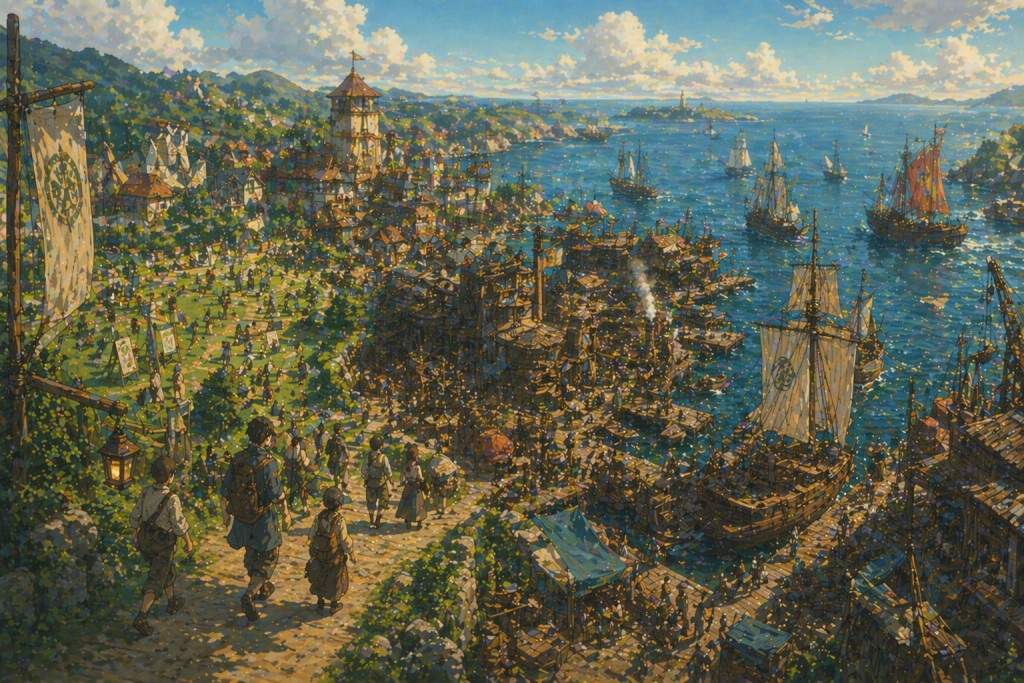
And then, eventually, you see it.
The harbor.
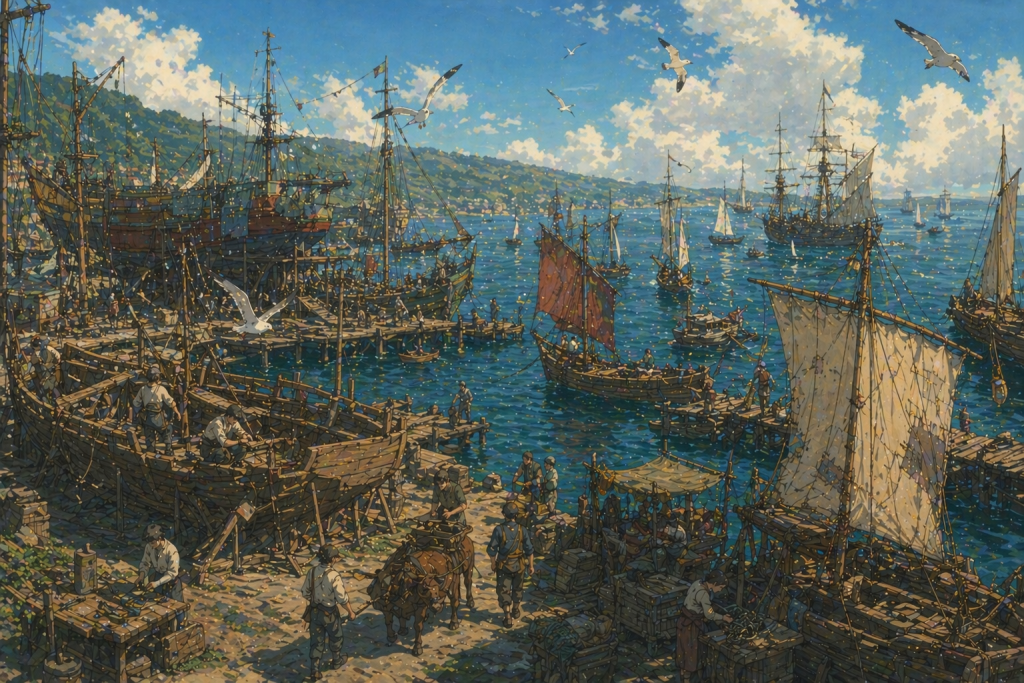
Ships everywhere. Some finished, some barely holding together.
And here’s where the illusion ends.
Because the harbor doesn’t care what you meant to build.
It only cares if it floats.
Ships leave constantly. Some don’t make it far. Some turn back quickly. Some break apart just beyond the shoreline.
No one is surprised.
No one pretends otherwise.
And every now and then, you see something different.
Two ships, damaged, drifting close.
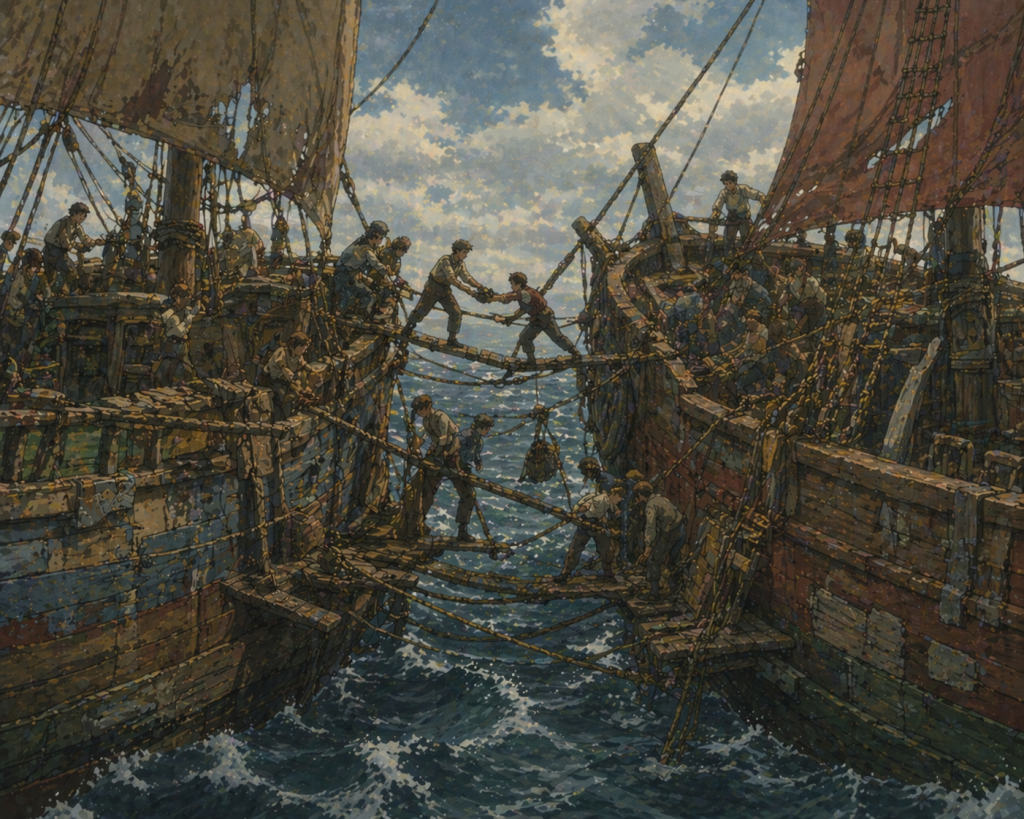
They don’t collide. They align.
Rope by rope. Piece by piece.
Not because they planned to.
Because they have to.
And in that moment, something honest appears.
Not collaboration as an idea.
But collaboration as a response to reality.
The Bay
Out there, past the harbor, the water changes.
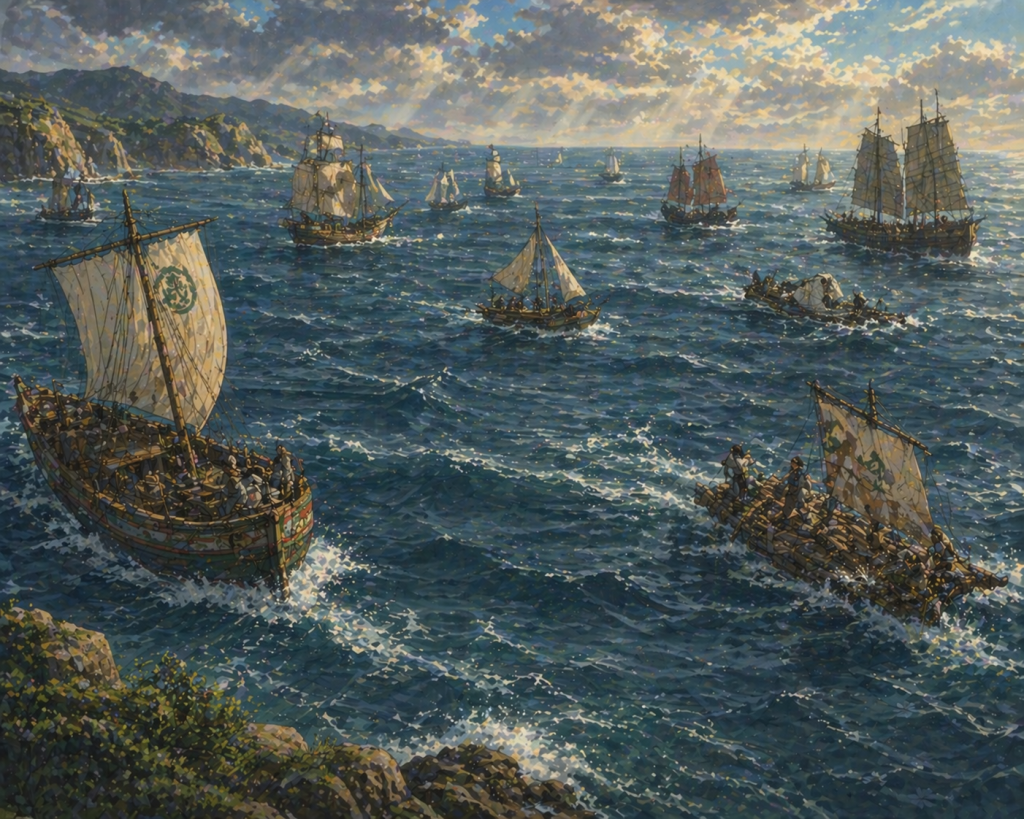
Waves. Pressure. Unpredictable movement.
This is where control disappears.
You’re dealing with things you didn’t design:
- timing
- demand
- other people
- your own limits
And this is where most people finally understand something they couldn’t learn any other way:
You don’t rise because you believed.
You rise because you can hold your balance when everything shifts.

Subscribe to continue reading
Subscribe to get access to the rest of this post and other subscriber-only content.