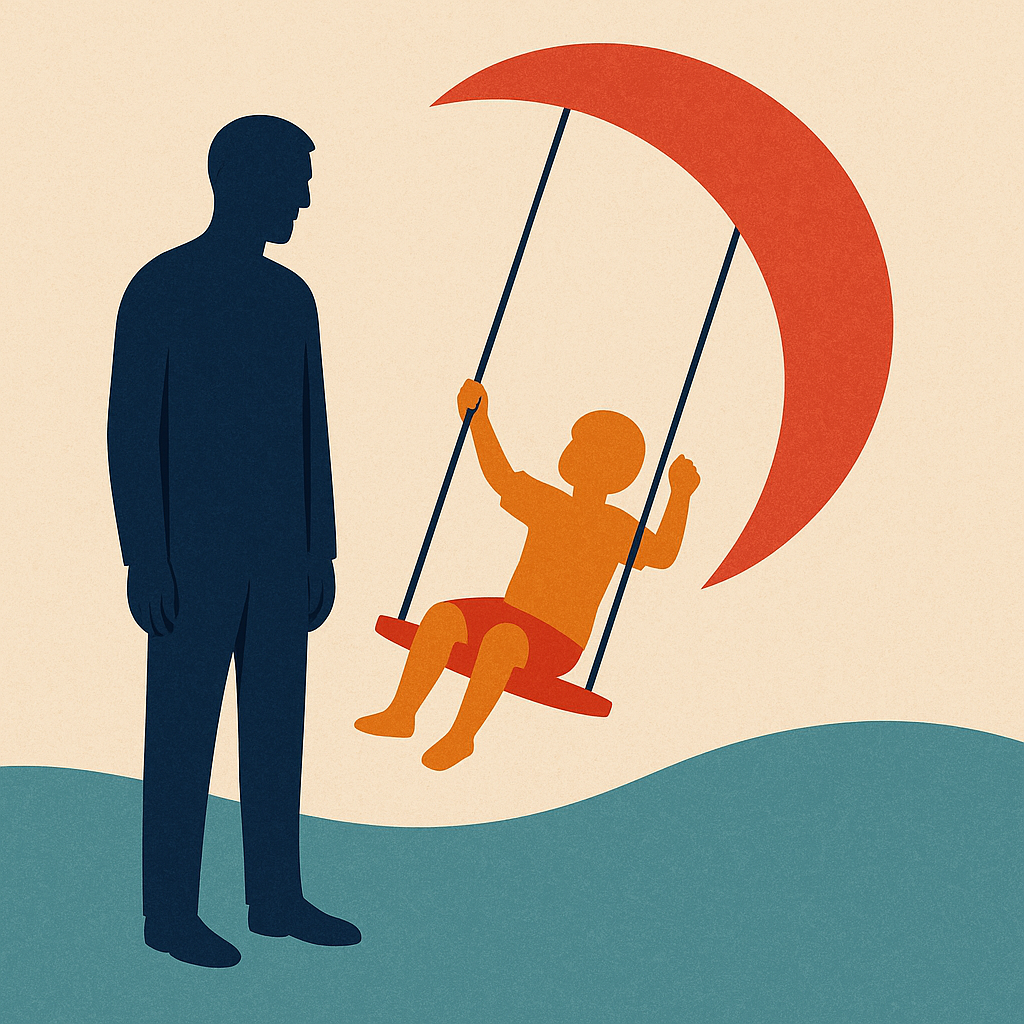
Somewhere along the way, most adults stop playing.
Not because play stops being fun,
but because life teaches us that being “serious” is safer.
You hear things like:
- “Grow up.”
- “Don’t mess around.”
- “Be professional.”
- “Don’t waste time.”
- “Don’t look foolish.”
Little by little, play gets replaced by pressure.
We build lives around control, certainty, and safety.
We think maturity means being careful.
But here’s the truth almost nobody talks about:
Play is not childish.
Play is how humans learn, trust, and grow.
And the moment we lose play, we lose part of ourselves.
Why Adults Pull Away From Play
Adults aren’t uncomfortable with play itself.
They’re uncomfortable with the things play requires:
- being seen without armor
- not knowing the next step
- risking a mistake
- letting other people see the real you
- acting without a guaranteed payoff
- trusting the moment instead of controlling it
Play exposes you.
And most adults have spent years learning to avoid that kind of exposure.
So we hide behind seriousness.
Seriousness becomes a shield we use to prove we are responsible, stable, and “worth something.”
But in protecting ourselves,
we cut ourselves off from the very thing that keeps us alive on the inside.
The Great Irony
The strange thing is that play is where adults become the most capable.
In play, you see:
- faster learning
- clearer thinking
- better listening
- real creativity
- deeper connection
- more generosity
- honest collaboration
Every great team culture has an element of play.
Every deep friendship gets built through moments of play.
Children learn through play,
and adults rediscover their power the same way.
Seriousness helps you execute.
Play helps you evolve.
You need both, but most adults only use one.
Why Our Events and Games Work So Well
The entire movement I’m building — Smart Founders, Finders Guild, and the learning network — works because of this simple truth:
If you create a safe environment for adults to play again,
you unlock a self they haven’t accessed in years.
A self that:
- learns quickly,
- collaborates naturally,
- gives freely,
- thinks creatively,
- and trusts wisely.
Play isn’t the opposite of work.
Play is the doorway back to real work — the kind that matters.
The Real Question
So the question isn’t,
“Why don’t adults like to play?”
The real question is,
“What did life teach you that made play feel dangerous?”
And even deeper,
“What could your life look like if you relearned play again?”
Because anyone who relearns play
relearns courage, curiosity, connection, and joy.
Those things were never childish.
They were the beginning of wisdom.
And they still are.
Discover more from Bryant Stratton
Subscribe to get the latest posts sent to your email.