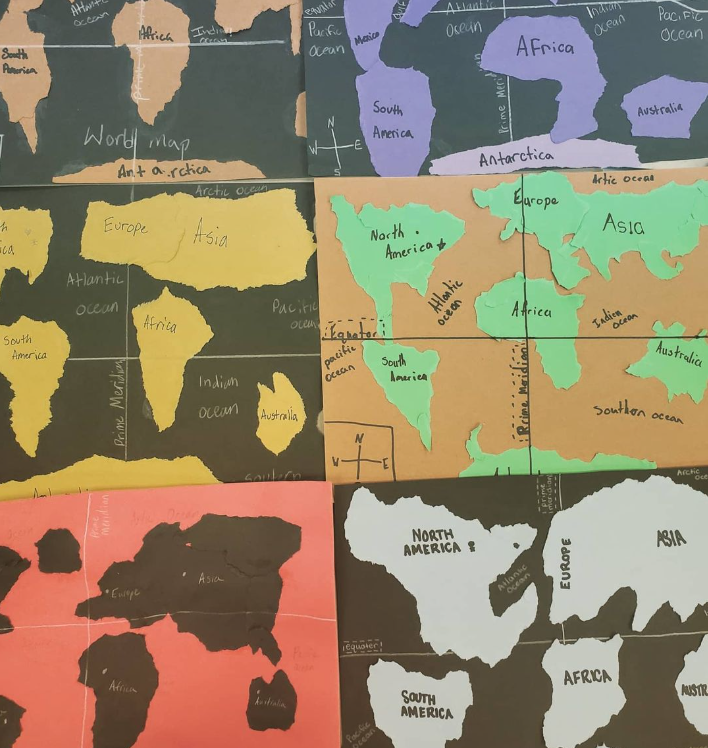
The first article I ever wrote started with a simple story. A parent sitting in a chair, trying to watch television, a child playing nearby, noise building, patience thinning. The parent tears a newspaper, the image of the world scattered across the floor, and tells the child to put it back together and be quiet. What stayed with me wasn’t the cleverness of the solution, but the shift in perspective, that by putting the person together on the back of the page, the world reassembled itself almost effortlessly. At the time, what struck me was clarity, the idea that when you change the way you look at things, the things you look at change, and that without the ability to see clearly, nothing really works. What I didn’t understand then was that the same principle was quietly shaping my own identity.
There’s something subtle and powerful about observation that we rarely talk about. When I observe you and you observe me, we don’t just exchange information, we create a frame together. Inside that frame, certain traits get noticed, certain behaviors get reinforced, and over time, those repetitions harden into something that feels like truth. This isn’t mystical, it’s relational. Families do it. Schools do it. Organizations do it. We stabilize each other through attention, and eventually we become recognizable, not always because that’s who we are, but because that’s who works in the system we’re part of.
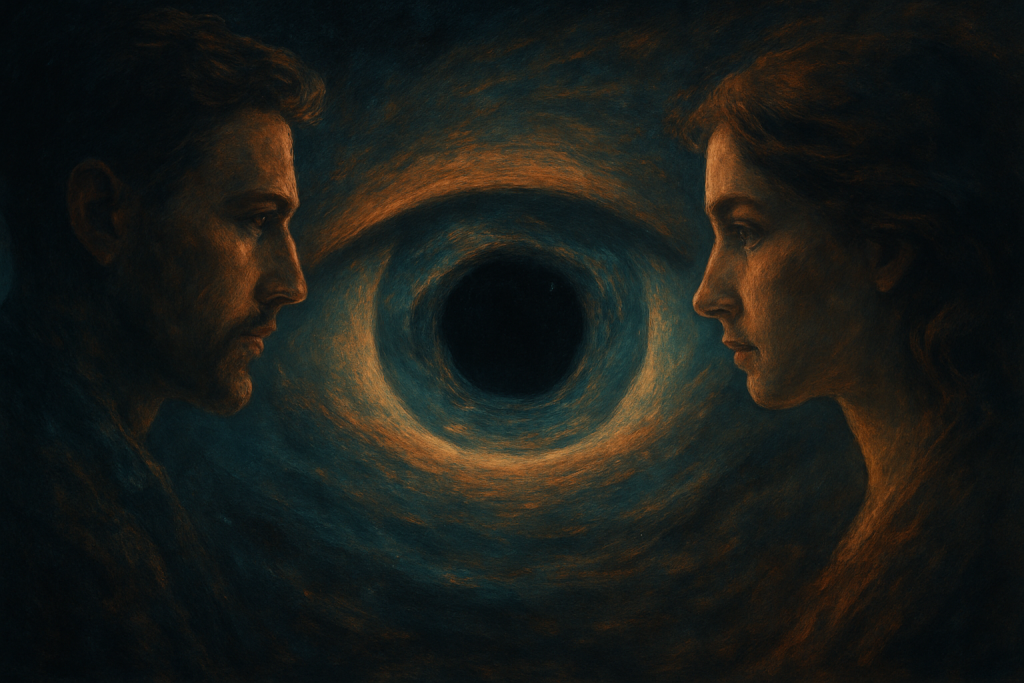
Before we’re clearly defined, we’re mostly potential. Not infinite in some abstract way, just unfinished, adaptable, capable of taking many shapes. But systems don’t tolerate ambiguity for long. Parents, teachers, teams, they want to know what they’re dealing with, so they observe, label, correct, and protect. None of that is wrong. It’s human. The problem is that observation has consequences. What gets treated as fragile becomes fragile. What gets corrected repeatedly becomes something that needs correcting. What gets rescued learns to wait for rescue. Over time, possibility collapses into form, like a wave settling into a particle, not because it had to, but because it created stability.
In my own family system, attention didn’t arrive when I was calm or capable, it arrived when I was struggling. At first, people didn’t know how to work with me, so they tried to protect me the best way they knew how. They stepped in, they corrected, they managed. Over time, I internalized that view, and without consciously deciding to, I reinforced it. I learned that being okay meant being alone, that being calm meant being unseen, that being resourced meant no one showed up, and that struggle meant connection. So I stayed just off enough to be noticed. Not because I wanted to fail, but because I wanted to belong. The observation loop closed, they saw someone who needed help, I became someone who needed help, and the identity stabilized.
What took me a long time to understand is that when you grow up this way, health can actually feel wrong. Calm feels empty. Regulation feels boring. Success feels exposed. Being seen without being corrected feels unsafe. So when life starts working, when people notice, trust, want to invest, want to help, the nervous system doesn’t relax, it tightens. Because now you’re not being fixed, you’re being relied on, and that’s a completely different experience. That’s often the moment people like me disappear, not physically, but internally. We numb, distract, smoke, drink, create secret lives, start fights, or quietly pull away. Not because we don’t want what’s happening, but because disappearing breaks the observation loop and restores a sense of autonomy.
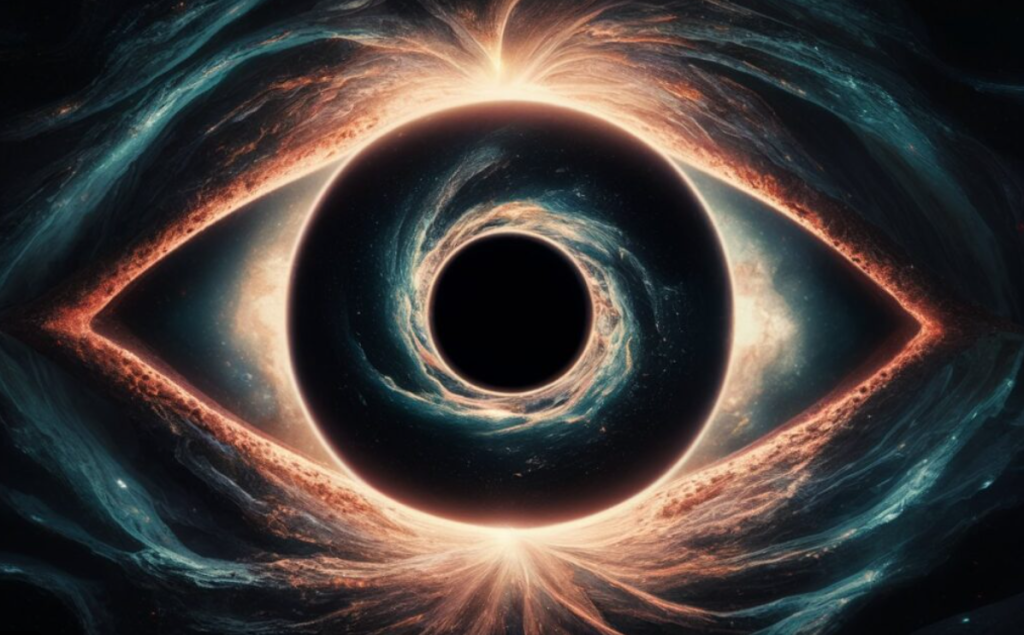
There’s a metaphor I’ve found useful here, borrowed loosely from quantum theory, though I don’t take it literally. Before observation, there is potential, undifferentiated and undefined. When observation occurs, that potential folds, and from that fold, perspective appears, something like an eye. From that perspective comes meaning, and from meaning comes identity. So when people say the universe is looking at itself, it sounds nonsensical, and that’s the point. Language breaks down before definition. Anything we say here is only a near-truth, useful but incomplete, because the moment we define something fully, we freeze it, and reality doesn’t like being frozen.
Looking back, I don’t think that first article was really about design thinking. It was about identity. When you put the person together, the world comes together. When you change how you see the human, everything else reorganizes around that clarity. The problem isn’t observation, it’s narrow observation. Correction without curiosity. Protection without trust. Definition without flexibility. That’s when potential collapses unnecessarily.
Health, as I understand it now, isn’t about avoiding being seen. It’s about learning how to remain yourself while being seen. It’s the ability to be visible without being fixed, to receive without guilt, to be calm without disappearing, to succeed without erasing yourself. Health isn’t the absence of structure, it’s movement within it, the capacity to hold form without losing flexibility.
What I’m learning is that identity isn’t something you possess, it’s something you participate in. It’s co-created moment by moment through observation, response, and choice, which means it can be updated. I don’t need to struggle to be seen. I don’t need to be corrected to belong. I don’t need to disappear to be free. Those were solutions that worked once. They don’t anymore.
Before we’re defined, we’re possible, and even now, every definition is just a temporary agreement between observers trying to understand each other. The work isn’t escaping the world or fixing it piece by piece. It’s learning how to see ourselves, and each other, clearly enough that the world doesn’t need to be torn apart to be put back together. Put the person together. The rest follows.
Discover more from Bryant Stratton
Subscribe to get the latest posts sent to your email.